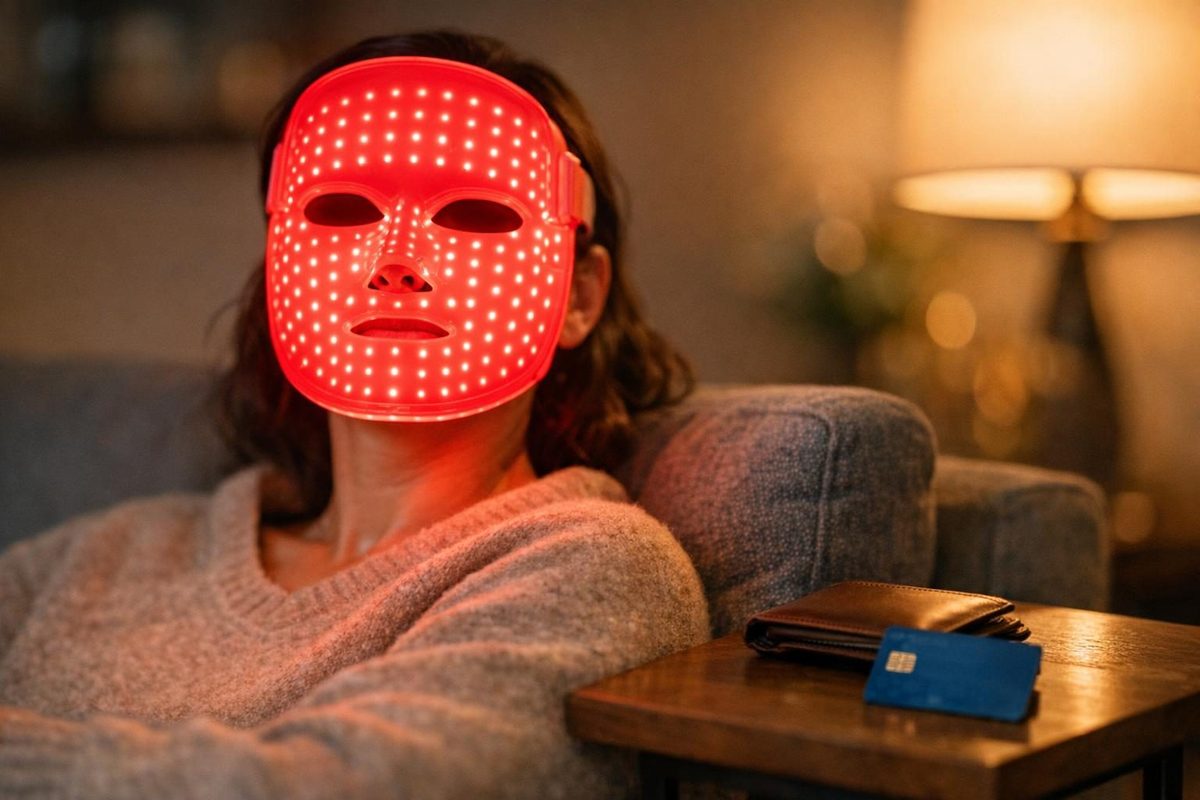
A red light therapy mask is an LED face mask that delivers specific wavelengths of visible and near-infrared (NIR) energy to the skin. If you have a health savings account (HSA) or flexible spending account (FSA), you may be wondering whether you can use those tax-advantaged dollars to buy one. The short answer: yes, but you will likely need a letter of medical necessity from your doctor first.
That single document changes everything. Without it, your plan administrator will almost certainly deny the purchase. With it, the device becomes a qualified medical expense under IRS rules.
How the IRS Classifies Red Light Therapy Devices
The Internal Revenue Service (IRS), the federal agency that enforces U.S. tax law, determines which products qualify as eligible expenses for HSA and FSA accounts. Photobiomodulation (PBM) devices fall under a gray area. They are not explicitly listed as eligible items on the IRS approved list, but they are not banned either.
IRS Publication 502 states that medical expenses include amounts paid for the “diagnosis, cure, mitigation, treatment, or prevention of disease.” PBM, the clinical term for this approach, has peer-reviewed evidence supporting its use for acne, wound healing, pain reduction, and skin rejuvenation. When your doctor prescribes a device for a specific medical condition, it qualifies as a deductible expense.
One mistake I see repeatedly is people buying a light therapy device first and then trying to get reimbursement after the fact. That approach rarely works. Get the letter before you swipe your card.
What Is a Letter of Medical Necessity?
A letter of medical necessity (LMN) is a written statement from a licensed healthcare provider confirming that a specific product or treatment is medically required for your condition. For HSA or FSA purchases, this letter serves as proof that the expense is not purely cosmetic.
Your letter should include:
- Your diagnosed medical condition (such as acne, rosacea, psoriasis, or chronic pain)
- The specific device recommended (an FDA-cleared LED face mask)
- How the device treats or mitigates the condition
- The prescribing provider’s name, credentials, and signature
Most plan administrators accept this letter at the point of sale or during a reimbursement claim. Some debit card systems require the document on file before they will approve the transaction. Check with your administrator to confirm the process.
HSA vs. FSA: Key Differences for These Purchases
Both a health savings account and a flexible spending account let you pay for qualified expenses with pre-tax dollars. But they work differently, and those differences matter when buying an LED face mask for treatment.
| Feature | HSA (Health Savings Account) | FSA (Flexible Spending Account) |
|---|---|---|
| Eligibility | Requires a high-deductible health plan (HDHP) | Available through most employer plans |
| Funds roll over? | Yes, indefinitely | Usually use-it-or-lose-it (some plans allow $610 rollover) |
| LED mask eligible? | Yes, with LMN | Yes, with LMN |
| Payment method | Debit card or reimbursement | Debit card or reimbursement |
| Tax benefit | Contributions are tax-free, growth is tax-free, withdrawals for qualified costs are tax-free | Contributions reduce taxable income |
If your FSA plan year is ending soon and you have unspent funds, purchasing an eligible LED mask is a smart way to use your remaining balance on something that provides ongoing health value. Just make sure the LMN is in place before the purchase.
Which Conditions Make an LED Therapy Mask HSA Eligible?
Your HSA or FSA will cover the device when it treats a diagnosed medical condition. Cosmetic use alone (reducing fine lines or general skincare without a diagnosis) typically does not qualify. The distinction comes down to whether your doctor identifies a medical need.
Conditions that commonly support eligibility for LED light therapy include:
- Acne vulgaris: Blue light therapy (around 415 nm wavelength) and red wavelengths (630 nm) target acne-causing bacteria and reduce inflammation. Multiple FDA-cleared LED masks combine both blue light and red modes for this purpose.
- Rosacea: Red and NIR wavelengths calm inflammation and strengthen capillary walls. If you are exploring this use case, read more about red light therapy for rosacea and what the clinical evidence shows.
- Chronic pain and arthritis: Near-infrared energy at 850 nm penetrates deeper tissue and stimulates cytochrome c oxidase in the mitochondria, boosting cellular energy production. This mechanism also applies to devices like red light therapy gloves for arthritis.
- Psoriasis: Specific wavelengths reduce the overactive immune response that drives plaque formation.
- Wound healing: LED exposure accelerates tissue repair at the cellular level, measured in energy doses of J/cm².
If your doctor diagnoses any of these conditions and recommends photobiomodulation as part of your treatment plan, the equipment becomes an eligible expense you can purchase using your HSA or FSA card.
How to Buy a Light Therapy Mask With Your HSA or FSA
The process is straightforward once you have the right paperwork. Follow these steps to use your funds without issues.
- Get a diagnosis and LMN from your doctor. Schedule an appointment, discuss your condition, and ask for an LMN that specifically names an LED face mask as the recommended treatment.
- Confirm coverage with your plan administrator. Call the number on your card and ask whether photobiomodulation devices are covered with an LMN on file. Some plans have a pre-approval step.
- Choose an FDA-cleared device. The Food and Drug Administration (FDA) clears LED masks as Class II medical devices. Buying an FDA-cleared product strengthens your case for reimbursement. Look for devices that list their specific wavelengths (typically 630 nm red and 850 nm infrared) and energy output.
- Pay at checkout. Many online retailers now accept these payments directly. If the transaction is declined, pay out of pocket and submit a reimbursement claim with your LMN and receipt.
- Save all documentation. Keep the LMN, receipt, and any correspondence. The IRS can audit withdrawals, and you need proof that each expense was a qualified one.
What to Look for in an Eligible LED Face Mask
Not every LED facial mask on the market is worth your money. When you use your HSA or FSA for one of these devices, pick a product that delivers real therapeutic value.
Prioritize these features:
- FDA clearance: This is non-negotiable for eligibility. An FDA-cleared mask has been reviewed for safety. Devices from brands like CurrentBody Skin LED Light Therapy, Dennis Gross DRX, and LifePro carry this clearance.
- Clinically relevant wavelengths: Red (620 to 660 nm) and near-infrared (810 to 850 nm). Anything outside these ranges has less clinical support for skin and pain conditions.
- Adequate irradiance: The mask should deliver enough energy (measured in mW/cm²) to reach therapeutic doses within a 10 to 20 minute session. Cheap masks with weak LEDs waste your time.
- Wireless and rechargeable design: A portable LED face mask with a rechargeable battery (look for 2000mAh or higher) makes daily treatment sessions realistic. Corded masks tether you to an outlet.
- Multiple treatment modes: Masks offering red, NIR, and blue light modes give you flexibility. Some portable devices include 3 to 7 modes for different conditions.
If you are also looking for full-body options or panel-style devices for home use, check out our guide to the best red light therapy lamps for home setups.
Common Mistakes When Paying With HSA or FSA Funds
After helping dozens of readers sort out their reimbursement claims, these are the pitfalls that trip people up most often.
Buying before getting the letter. This is the number one mistake. Your plan administrator may deny retroactive claims if the LMN is dated after the purchase. Always get the letter first.
Choosing a non-FDA-cleared device. Generic LED masks from marketplace sellers often lack FDA clearance. Without that clearance, the administrator has stronger grounds to deny the claim, even with an LMN.
Listing cosmetic reasons on the LMN. If your letter says “skin rejuvenation” or “anti-aging” without tying it to a diagnosed condition, the administrator will flag it as cosmetic. The letter must reference a specific medical condition and explain why the device is medically necessary.
Forgetting the eye mask or safety requirements. Some plans require that therapeutic devices include proper safety features. Most quality LED masks include built-in eye protection, but verify this before purchasing.
Frequently Asked Questions About LED Therapy Masks and HSA
Is Omnilux HSA eligible?
Omnilux LED masks are FDA-cleared medical devices, which makes them strong candidates for reimbursement through your HSA. You will still need an LMN from your doctor linking the device to a diagnosed condition. Once you have that letter, Omnilux products are among the most commonly approved items for these purchases.
Can you use HSA for face products?
You can use your HSA for face products only when they are prescribed to treat a medical condition. Over-the-counter skincare products for general use are not eligible. An LED face mask prescribed for acne or rosacea qualifies, but a moisturizer bought for general complexion improvement does not. The IRS draws the line at necessity versus cosmetic preference.
Can I use a LED mask if I have rosacea?
Yes. LED exposure at wavelengths between 630 and 660 nm has shown benefit for rosacea patients by reducing inflammation and redness. Start with shorter sessions (5 to 10 minutes) and monitor your skin’s response. Because rosacea is a diagnosed medical condition, this use case also supports eligibility with proper documentation.
What happens if my claim for an LED therapy mask is denied?
Request a written explanation from your plan administrator. Most denials result from missing documentation or insufficient medical justification. Submit an appeal with an updated LMN that clearly ties the device to your diagnosed condition and references the clinical evidence for photobiomodulation as a treatment. Many denied claims are approved on appeal.
Start by scheduling an appointment with your doctor to discuss whether an LED therapy mask fits your treatment plan. Ask specifically for a letter of medical necessity that names the device and your diagnosed condition. Once that letter is in hand, confirm coverage with your plan administrator, then choose an FDA-cleared LED face mask and pay with your account funds. If your FSA plan year ends soon, act quickly so you do not lose unspent FSA funds on December 31.