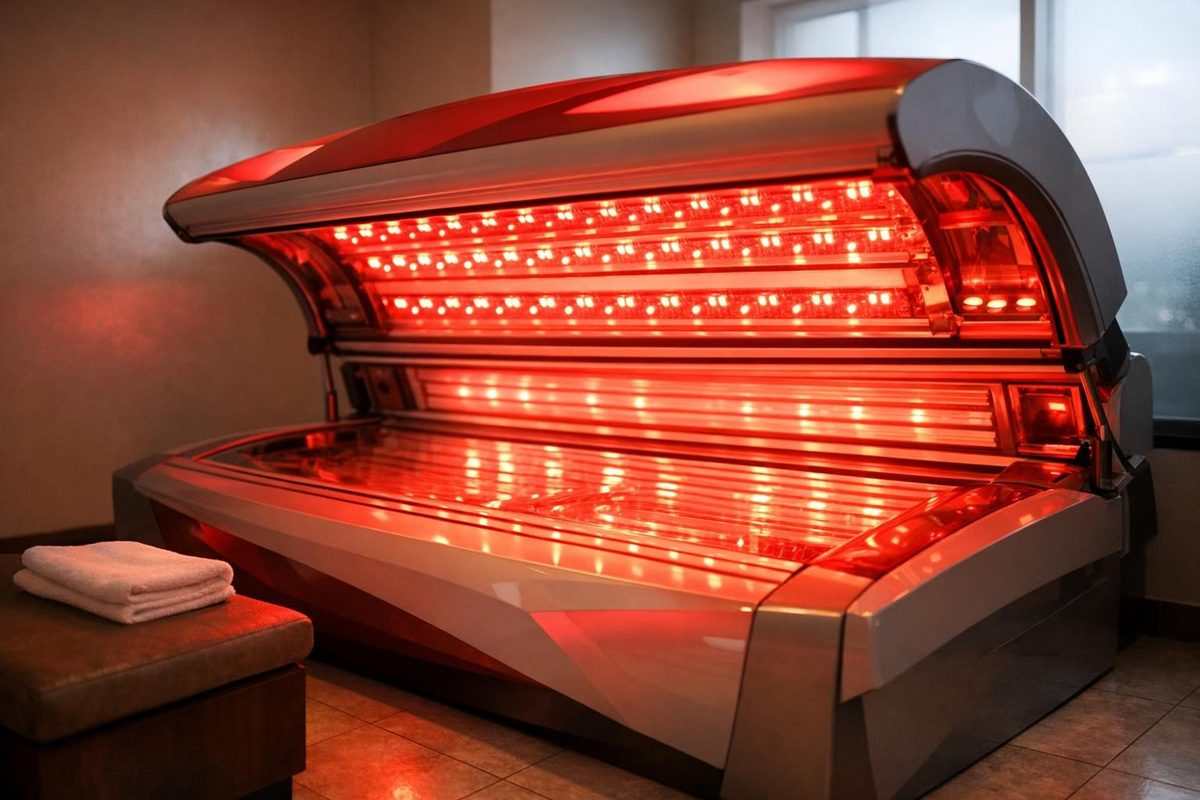
A red light therapy tanning bed looks like a standard indoor tanning unit, but it swaps ultraviolet bulbs for LED panels emitting energy between 630 nm and 850 nm. Instead of darkening your skin, these devices stimulate cellular repair beneath the surface. Salons now stock them alongside traditional units, and hybrid models that combine both technologies are gaining ground. Here is how they work and whether they deserve the higher price tag.
What Is a Red Light Therapy Tanning Bed?
This type of device is a full-body photobiomodulation (PBM) system. PBM uses specific frequencies of visible and near-infrared (NIR) energy to penetrate the skin, where cytochrome c oxidase, an enzyme inside mitochondria, absorbs it. That triggers increased ATP production, fueling cellular repair and collagen synthesis while reducing inflammation.
Manufacturers like ProSun build dedicated systems and hybrid models that pair ultraviolet lamps with LED panels. The FDA classifies these as low-risk wellness products, not medical devices. If you prefer treating at home, check out the best red light therapy lamps for home use instead.
How These Beds Deliver Energy to Your Skin
The 630 nm to 660 nm range targets cells in the upper dermis. NIR around 810 nm to 850 nm penetrates deeper, reaching muscle, joint, and bone tissue. Most commercial units produce 50 to 100 mW/cm2 of irradiance, translating to roughly 3 to 6 joules per square centimeter (J/cm2) in a 10-minute session.
Dose matters more than session length. The therapeutic window for PBM sits between 1 and 10 J/cm2 for most skin conditions. A typical tanning salon visit of 10 to 15 minutes lands in that range. One detail most guides miss: distance from the panels changes your dose significantly, so ask salon staff about the irradiance rating of their specific equipment.
Benefits of Red Light Therapy in a Salon Setting
This therapy helps with a broad set of concerns. The strongest clinical evidence supports these wellness benefits:
- Collagen and elastin production. Exposure around 660 nm boosts fibroblast activity, reducing fine lines and wrinkles over 8 to 12 weeks.
- Skin tone and rejuvenation. It enhances blood flow to the dermis, improving overall skin health and reducing redness. If you deal with facial flushing, see our guide on phototherapy for rosacea.
- Pain and joint relief. NIR wavelengths penetrate deep enough to alleviate joint pain and stiffness, which is why some fibromyalgia patients book 2 to 3 sessions per week.
- Mood and fatigue. Full-body exposure can boost energy levels and ease seasonal fatigue, similar to bright-spectrum treatment for seasonal affective disorder.
One thing this therapy does not do: produce a golden tan. A pure unit has zero ultraviolet energy, so melanin production stays unchanged. Hybrid models can tan and treat simultaneously, but the ultraviolet portion still carries the same skin damage risks as any indoor tanning session.
Comparison: Dedicated vs. Ultraviolet vs. Hybrid Beds
| Feature | PBM Only | Ultraviolet Only | Hybrid |
|---|---|---|---|
| Spectrum | 630 to 850 nm (visible + NIR) | 280 to 400 nm (short-wave and long-wave) | Both |
| Primary effect | Cellular repair, collagen, pain relief | Melanin production, vitamin D | Tan + wellness |
| Skin damage risk | None at recommended doses | Premature aging, sun damage | Ultraviolet portion carries risk |
| Session length | 10 to 20 min | 8 to 15 min | 12 to 20 min |
| Cost per session | $25 to $75 | $5 to $15 | $30 to $80 |
| HSA/FSA eligible | Sometimes (check IRS rules) | No | Partially |
Overexposure to ultraviolet energy accelerates signs of aging, including elasticity loss and dark spots. A PBM-only unit avoids those risks entirely because it operates outside the ultraviolet portion of the electromagnetic spectrum.
Tips for Your First Session
- Start at 10 minutes. Increase to 15 or 20 after 3 to 4 visits once your skin acclimates.
- Expose as much skin as possible. These frequencies cannot penetrate thick fabric, so remove clothing and jewelry. Eye protection is optional (unlike ultraviolet units, where goggles are mandatory).
- Stay consistent. Three to 5 sessions per week for 4 to 8 weeks is the standard protocol. Sporadic use produces minimal results.
- Ask about pulsed settings. Research on pulsed phototherapy at 10 Hz vs 40 Hz suggests different frequencies target different conditions. Continuous wave works well for general skin health.
Expect gentle warmth, not heat. If the device feels hot, it may be an infrared heat panel rather than a true LED therapy unit. Ask the spa for exact spectral specifications before your first session.
Are Red Light Therapy Tanning Beds Worth the Cost?
A single visit runs $25 to $75 at most salons. Monthly unlimited packages typically cost $99 to $199. For someone focused on skin rejuvenation or pain management, that wellness experience often justifies the price.
Before committing to a membership, try 4 to 6 sessions and track what you notice. Texture improvements, reduced stiffness, or better sleep are common early signals. If nothing changes after 6 visits at proper dose, red light therapy tanning beds may not fit your goals. Consider an at-home device for longer-term treatment instead.
Frequently Asked Questions
Are tanning beds with red light therapy better than UV-only models?
They serve different purposes. PBM promotes collagen production and supports skin health without ultraviolet damage. Standard units produce a tan but increase cancer risk. For wellness, the PBM option is safer.
Is it good to do red light therapy after a standard tanning session?
Yes. PBM afterward can counteract some drying effects on the skin. It stimulates collagen repair and reduces redness. Many salons offer combination packages for this reason. Space them at least 5 minutes apart to let skin cool.
What is the downside of red light therapy?
Cost and time commitment are the main drawbacks. Sessions run $25 to $75 each, and visible results typically require 3 to 5 visits per week over several weeks. Some people experience temporary redness during early sessions. No serious side effects are documented at standard doses approved by the FDA.