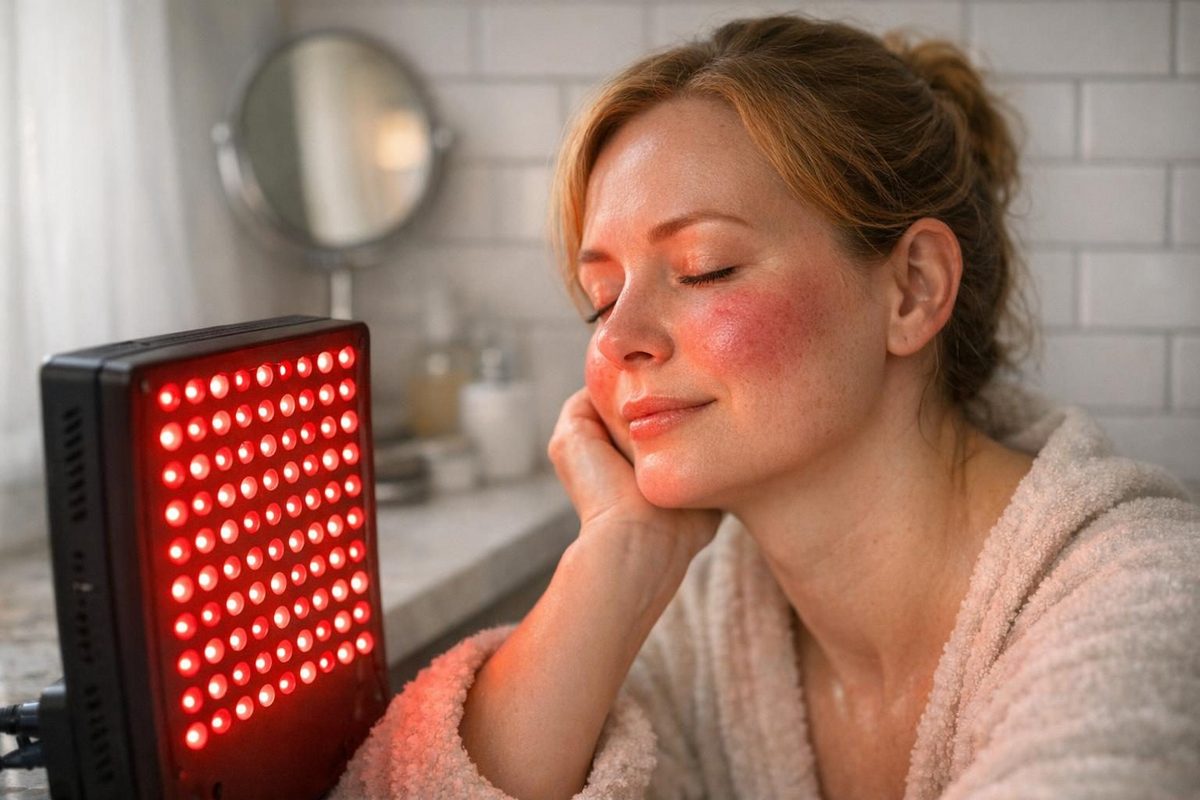
Red light therapy for rosacea is gaining attention as a non-invasive option, and clinical research supports some of the enthusiasm. This chronic skin condition causes persistent redness, visible blood vessels, and sometimes red bumps or pustules on the face. It affects roughly 16 million Americans, according to the National Rosacea Society. Standard treatments like azelaic acid, metronidazole, and doxycycline help manage symptoms, but they don’t work for everyone. That gap is where photobiomodulation fits in.
Photobiomodulation (PBM) is the clinical term for what most people call red light therapy. It uses specific bands of energy, typically between 630 nm and 660 nm in the visible red range and 810 nm to 850 nm in the near-infrared (NIR) range, to stimulate cellular repair. The energy penetrates skin tissue and is absorbed by cytochrome c oxidase, an enzyme inside mitochondria. This triggers increased ATP production, reduced oxidative stress, and lower swelling at the cellular level.
How Red Light Therapy Targets Rosacea Symptoms
PBM works through two primary mechanisms: anti-inflammatory action and tissue repair. Inflammation is the core driver behind flare-ups, reddening episodes, and the papules and pustules that characterize papulopustular rosacea. The process reduces pro-inflammatory cytokines while boosting anti-inflammatory mediators. One mistake I see repeatedly is people assuming any LED device will help. The spectral band matters enormously.
The 630 to 660 nm range addresses surface-level erythema and support skin barrier repair. Near-infrared reaches deeper tissue layers, targeting blood vessel dilation (telangiectasia) and edema that contribute to persistent facial redness. A 2021 study published in Dermatologic Therapy found that patients with rosacea who received LED sessions twice weekly for 8 weeks showed measurable improvement in erythema scores compared to control groups.
The immune system plays a bigger role here than most people realize. Research points to dysfunction in the innate immune system as a root contributor to the pathophysiology of this condition. Both visible and NIR bands appear to modulate the immune response, calming overactive inflammatory pathways without suppressing normal function.
Subtypes of Rosacea and Which Respond Best
Not every type responds equally to PBM. The National Rosacea Society Expert Committee classifies the condition into four subtypes, and understanding yours matters before starting any protocol.
- Subtype 1 (Erythematotelangiectatic): Characterized by facial flushing, persistent redness, and visible blood vessels. This subtype shows the most consistent response in clinical settings. The anti-inflammatory and vascular-calming effects directly target these signs and symptoms.
- Subtype 2 (Papulopustular): Involves bumps, pustules, and acne-like breakouts. Mild to moderate cases respond well to PBM, particularly when combined with topical treatments. It helps reduce the swelling behind papules and pustules.
- Subtype 3 (Phymatous): Thickened skin and enlarged oil glands, most commonly on the nose. Phymatous presentations are harder to address with LED devices alone. Laser therapies like pulsed dye laser or KTP laser are typically more effective here.
- Subtype 4 (Ocular): Affects the eyes, causing sensitivity, itch, and irritation. Ocular rosacea symptoms may benefit indirectly from reduced facial swelling, but direct exposure near the eyes requires caution and protective eyewear.
What a Treatment Protocol Looks Like
Red light therapy typically involves sessions of 10 to 20 minutes, 3 to 5 times per week. Consistency matters more than intensity. Most dermatologists and management guides recommend starting with lower energy doses, around 4 to 6 joules per square centimeter (J/cm2), and adjusting based on how your skin responds.
Here is a practical starting protocol:
- Choose a device with verified output. Look for LED panels or an LED mask that outputs 630 to 660 nm and optionally 830 to 850 nm (NIR). Check our list of top-rated red light therapy lamps for devices that meet clinical specifications.
- Start with 10-minute sessions at 6 inches from the face. Closer distances increase irradiance. Keep sessions short initially to gauge tolerance.
- Track your triggers alongside sessions. Sun protection, spicy foods, alcohol, and temperature extremes can trigger reddening that masks progress. Controlling triggers while treating gives you a clearer picture of what PBM is doing.
- Increase gradually over 2 to 4 weeks. Move to 15- or 20-minute sessions if your skin tolerates the initial protocol without increased irritation.
- Evaluate at 8 weeks. Most clinical studies measure outcomes at 6 to 12 weeks. Give it at least 8 weeks of consistent use before judging efficacy.
People with rosacea who also deal with joint pain might find it interesting that the same spectral bands used for skin conditions are applied in red light therapy gloves for arthritis. The underlying PBM mechanism is identical.
PBM vs. Other Rosacea Treatments
How does this approach compare to established options? Here is a side-by-side look at the most common approaches.
| Approach | Targets | Typical Timeline | Cost Range |
|---|---|---|---|
| LED photobiomodulation (home devices) | Erythema, inflammation, skin repair | 8 to 12 weeks | $100 to $500 (one-time device cost) |
| Intense pulsed light (IPL) | Visible blood vessels, flushing | 3 to 6 sessions | $300 to $600 per session |
| Pulsed dye laser | Telangiectasia, flushing | 2 to 4 sessions | $400 to $800 per session |
| Topical metronidazole | Papules, pustules, erythema | 4 to 12 weeks | $20 to $80/month |
| Oral doxycycline | Inflammation (systemic) | 6 to 12 weeks | $15 to $50/month |
| Azelaic acid | Bumps, erythema, skin texture | 4 to 8 weeks | $15 to $60/month |
Laser treatment and IPL remain the gold standard for visible blood vessels and severe cases. PBM is generally safe, less expensive long-term, and can be done at home. Many patients use it alongside topical prescriptions rather than as a standalone replacement. A dermatologist can help determine whether your specific presentation warrants laser therapies, photodynamic therapy, or a gentler approach with home devices.
What Clinical Evidence Actually Shows
The evidence for PBM as an emerging approach to treating rosacea is promising but still developing. Most published studies are small (under 50 participants), and few are randomized controlled clinical trials. That said, the direction is consistently positive.
A 2019 review in the Journal of Cosmetic Dermatology examined LED treatments across multiple skin conditions and concluded that light-emitting diode sessions are a safe and effective option for reducing inflammatory skin symptoms. The authors noted that blue light showed additional antimicrobial benefits for pustular presentations, while longer spectral bands were superior for calming erythema and supporting wound healing.
What the studies haven’t settled is the optimal dosing protocol. Exposure duration, distance, spectral combination, and energy density all vary across trials. The cause of rosacea remains incompletely understood, with research pointing to a mix of immune system dysfunction, gut microbiota imbalance, and vascular instability. Until the pathophysiology is clearer, protocols will keep evolving.
One thing most guides won’t tell you: the patients who see the best results tend to be those with subtype 1 who also address their triggers simultaneously. PBM may reduce baseline inflammation, but if you’re eating spicy foods, skipping sun protection, and using harsh cleansers, you’ll keep re-triggering the cycle. A good moisturizer and gentle skin care routine amplify what the treatment can do.
Device Selection and Cost Considerations
Home devices that may help treat this condition range from $60 handheld wands to $500+ full-face LED panels. The difference usually comes down to irradiance (power output), accuracy, and treatment area size. Devices marketed specifically for skin care tend to sit in the 630 to 660 nm range, which is appropriate for inflammatory skin concerns.
Some PBM devices are eligible for purchase with HSA/FSA funds if prescribed by a doctor for a diagnosed condition. The IRS allows HSA/FSA reimbursement for medical devices when prescribed, so ask your dermatologist for a letter of medical necessity. This can offset a significant portion of the upfront cost.
Worth noting: red light therapy tanning beds are not the same as clinical LED panels. Tanning beds that include visible wavelengths combine them with UV that can worsen flare-ups. Those with sensitive skin should avoid UV exposure and stick to dedicated LED or NIR-only devices.
Frequently Asked Questions About PBM and Rosacea
Is red light therapy OK for rosacea?
PBM is generally safe for most patients with this condition. Clinical studies show it reduces inflammation and erythema without the side effects of oral medications. Start with short sessions and monitor your skin’s response, since individual tolerance varies. Consult a dermatologist if you have ocular rosacea or are using isotretinoin, as photosensitivity may be increased.
How long does it take to help rosacea?
Most people notice initial improvement in erythema and flush frequency after 4 to 6 weeks of consistent use. Full results typically appear at 8 to 12 weeks. Consistency matters more than intensity, so sticking to a regular schedule of 3 to 5 sessions per week produces better outcomes than sporadic longer sessions.
What autoimmune condition is linked to rosacea?
This condition is associated with lupus, rheumatoid arthritis, type 1 diabetes, and celiac disease. The common thread appears to be chronic immune system dysregulation, which may explain why anti-inflammatory approaches like PBM show benefit for ongoing management.
Is rosacea linked to SIBO?
Small intestinal bacterial overgrowth (SIBO) has been linked to this condition in multiple studies. A 2008 study found that affected patients had significantly higher rates of SIBO, and treating the bacterial overgrowth led to symptom improvement for many participants. The gut microbiota connection remains an active area of research in dermatology.
Start by identifying your subtype and current triggers. Then pick a device with clinically validated output in the 630 to 660 nm range. Use it consistently for at least 8 weeks at 4 to 6 J/cm2 per session before evaluating results. If you combine red light therapy for rosacea with proper sun protection, gentle skin care, and trigger avoidance, you give yourself the best chance of meaningful improvement without prescription side effects.