Can Red Light Therapy Actually Raise Testosterone?
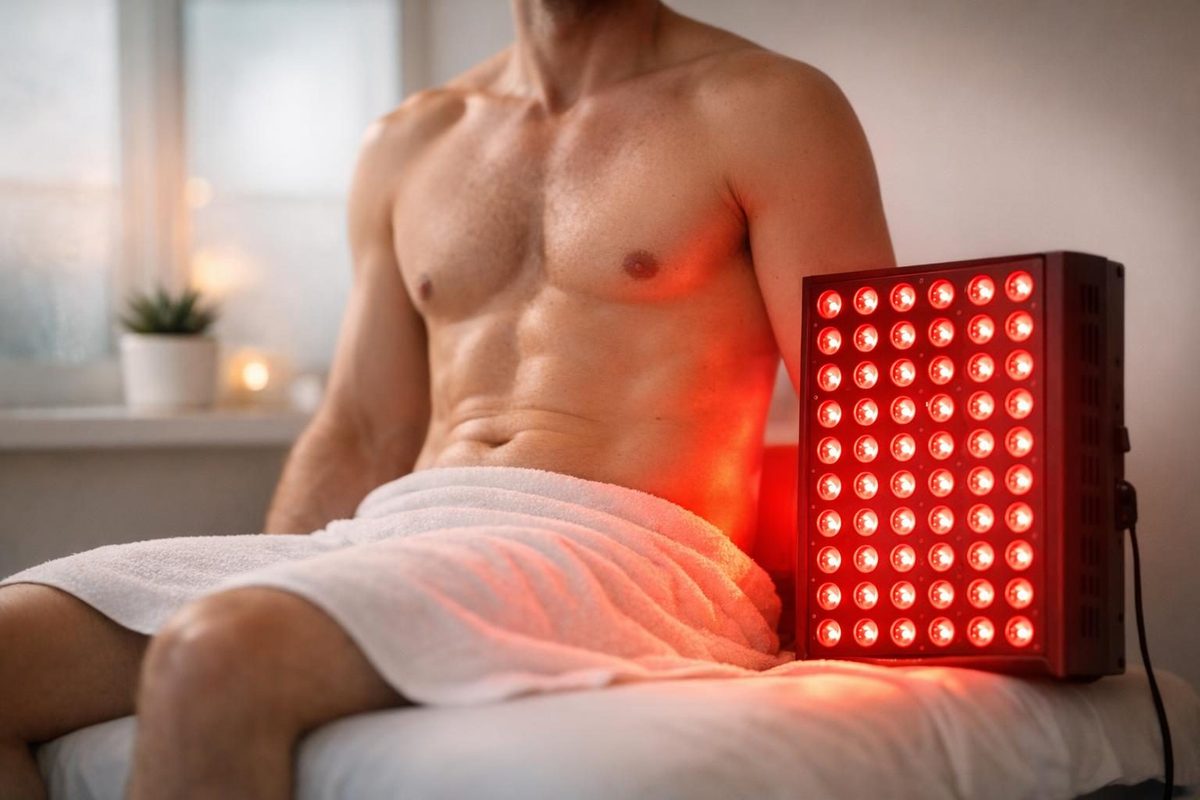
Red light therapy testosterone claims have gained serious traction in men’s health circles over the past few years. The idea is straightforward: shine specific wavelengths on the testes, and testosterone production goes up. But does photobiomodulation (PBM), the clinical term for this type of tissue stimulation, hold up under scrutiny? The short answer is that early research looks promising, though human trials remain limited.
Testosterone is a steroid hormone produced primarily in the Leydig cells of the testicle. It regulates muscle growth, libido, mood, bone density, and spermatogenesis. When levels drop, men often experience fatigue, reduced sex drive, and loss of lean mass. Conventional treatment for low testosterone typically involves hormone replacement therapy (TRT), which carries its own risks, including potential suppression of natural production and decreased sperm count.
That gap between wanting higher levels and not wanting the downsides of TRT is exactly where PBM enters the conversation.
How Red Light Therapy May Influence Testosterone Production
PBM devices use LED or laser emitters at wavelengths between 600 nm and 1,000 nm. The proposed mechanism centers on cytochrome c oxidase, an enzyme in the mitochondria that absorbs photons in the red and near-infrared spectrum. When this enzyme absorbs photon energy, it accelerates the electron transport chain, increasing adenosine triphosphate (ATP) production inside the cell.
For Leydig cells, higher ATP availability may translate into more efficient steroidogenesis, the biochemical pathway that converts cholesterol into sex hormones. One theory suggests that targeted exposure also reduces reactive oxygen species (ROS) in testicular tissue, lowering oxidative stress that can impair the cells that produce this hormone.
A 2013 study published in Biomedical Research found that 670 nm irradiation improved serum hormone levels in rats after just five days. The treated group showed significantly higher readings compared to controls. Another animal study noted elevated excretion of sex hormones in the male rats receiving low-level laser therapy on the testes.
Human data is thinner. A small placebo-controlled pilot study on men with low desire found that light box exposure correlated with increased testosterone levels in men and improved sexual satisfaction scores. While not a direct PBM study, it supports the broader idea that certain wavelengths influence hormone levels through neuroendocrine pathways.
What Research Shows About Testicular Red Light Therapy
Research shows that PBM applied directly to the scrotal area produces measurable biological effects, at least in animal models. Rats treated with 670 nm irradiation at doses of 4 to 6 joules per square centimeter (J/cm2) showed increases in both androgen output and sperm motility. The dose matters: too little has no effect, while excessive heat from prolonged sessions can actually damage sperm production.
One key finding is that 850 nm penetrates deeper than visible red at 630 nm. Since the cells responsible for steroidogenesis sit inside the testis, deeper penetration likely matters for reaching the target tissue. Most devices designed for home use combine both red and NIR output for this reason.
No large-scale clinical trial has yet confirmed these results in humans. The studies that do exist on men tend to be small (under 40 participants), short (2 to 4 weeks), and sometimes use broadband panels rather than targeted units. That said, the biological plausibility is strong. Cytochrome c oxidase is present in testicular tissue, and its response to PBM is well documented across dozens of cell types.
The honest take: research shows that this approach has real potential for supporting testosterone, but calling it proven would overstate the current evidence.
Testicle Tanning vs. Targeted PBM for Testosterone
Testicle tanning went viral after a few public figures endorsed sunlight exposure to the groin as a testosterone booster. This is not the same thing as PBM. UV radiation from the sun or from red light therapy tanning beds carries real risks, including skin damage, increased cancer risk, and thermal injury to temperature-sensitive sperm cells. The testes hang outside the body specifically because sperm require a temperature about 2 to 4 degrees Celsius below core body temperature.
PBM uses non-UV output. There is no ionizing radiation involved. A properly calibrated device produces minimal heat at the skin surface, typically under 1 degree Celsius of temperature change when used at recommended distances (6 to 12 inches). That distinction matters for reproductive health and makes PBM a fundamentally different intervention than UV-based testicle tanning.
Practical Protocol for Using Red Light Therapy to Boost Testosterone
If you want to try red light therapy for testosterone support, here is what the available evidence and practitioner experience suggest:
- Choose the right device. Look for a panel that emits 630 to 660 nm (red) and 810 to 850 nm (NIR). Combination units hitting both ranges offer the best coverage. Check our list of the best red light therapy lamps for home use for tested options.
- Set the right dose. Target 4 to 6 J/cm2 per session. Most home panels deliver this in 5 to 15 minutes at a distance of 6 to 12 inches, depending on irradiance output.
- Frequency and duration. Three to five sessions per week, 10 to 20 minutes each. Some practitioners exploring pulsed red light therapy frequencies report using specific Hz settings, though evidence on pulsing for hormone health remains early-stage.
- Avoid overheating. If the device feels hot against skin, increase distance. Heat is the enemy of healthy sperm production and can suppress androgen output rather than raise it.
- Track results. Get a baseline blood panel measuring total testosterone, free testosterone, and sex hormone binding globulin (SHBG) before starting. Retest at 30 and 90 days.
One mistake I see repeatedly is men buying underpowered panels marketed as \”therapy devices\” that deliver less than 20 mW/cm2 at the surface. At that output, you would need 30-plus minutes per session to hit a therapeutic dose, and most people give up before the protocol has any chance of working.
Who Should Consider This Approach for Low Testosterone
Red light therapy may help men dealing with decreased testosterone who want to avoid medication or who are already on a broader hormone health protocol. It fits well as a complementary approach alongside sleep optimization, resistance training, stress management, and proper diet (nutrition plays a direct role in steroid hormone synthesis).
Men with testosterone deficiency, sometimes called hypogonadism, should consult a medical doctor before relying solely on PBM. Low testosterone levels below 300 ng/dL often require clinical intervention. This approach is generally considered safe, but it is not a substitute for working with a health professional when dealing with a diagnosed condition.
The FDA has cleared certain PBM devices for pain and inflammation, but not specifically for increasing testosterone or treating male infertility. That does not mean the method lacks value for these purposes. It means the formal regulatory pathway has not been completed. Some HSA/FSA accounts may cover these devices if prescribed for a cleared condition, per IRS guidelines on qualified medical expenses.
Can PBM Improve Sperm Quality Too?
Sperm health and testosterone production are closely linked but not identical. A man can have adequate androgen levels and still have poor sperm motility or low sperm count. The research on PBM and spermatogenesis is actually slightly stronger than the testosterone data.
Multiple animal studies show that low-level laser therapy at 633 to 670 nm can increase sperm motility by 20 to 30 percent. A 2017 study on human sperm samples treated in vitro found improved motility and viability. For couples dealing with male infertility, this is meaningful data, particularly since conventional treatments for poor sperm quality are limited.
PBM supports mitochondrial function in sperm cells the same way it does in steroidogenic tissue: by stimulating energy production through cytochrome c oxidase. Sperm are among the most mitochondria-dense cells in the body, which may explain their responsiveness to photon stimulation.
Benefits for male fertility extend beyond just motility. Some research suggests improvements in sperm morphology and overall semen quality, though large human trials are needed before drawing firm conclusions.
Frequently Asked Questions About Red Light Therapy and Testosterone
What color of illumination is good for testosterone?
Red wavelengths in the 630 to 660 nm range and NIR at 810 to 850 nm are the bands studied for testosterone support. These penetrate tissue and stimulate cellular energy production. UV and blue bands have not shown the same effects and carry additional risks.
How long does it take to increase testosterone levels with PBM?
Animal studies have shown measurable changes in as few as 5 days, but most human protocols run 4 to 12 weeks before retesting blood levels. Consistency matters more than session length. Three to five sessions weekly at proper dosing gives the protocol its best chance of producing results.
Is this approach safe for the testicles?
PBM is generally safe when used at recommended doses and distances. Unlike UV, it does not cause DNA damage or burns. The primary risk is excessive heat, which can impair sperm production. Keep sessions under 20 minutes and maintain 6 to 12 inches of distance from the device.
Can red light therapy replace testosterone replacement therapy?
No. PBM may support natural testosterone production, but it cannot replicate the direct hormonal delivery of TRT. Men with clinically diagnosed testosterone deficiency should work with a medical doctor to determine appropriate treatment. PBM may serve as a complementary tool, not a standalone replacement for clinical care.
Start by getting a baseline testosterone blood panel so you have real numbers to compare against. Then pick a quality device with verified irradiance specs in the 630 to 850 nm range, use it consistently for 8 to 12 weeks, and retest. If your testosterone levels move in the right direction, you have a low-risk tool worth keeping in your protocol. If they do not, you have lost nothing, and you can explore other approaches with your doctor from a position of data rather than guesswork. Red light therapy for testosterone is not a guaranteed fix, but it is one of the few interventions with biological plausibility, zero serious side effects, and a growing body of research behind it.